
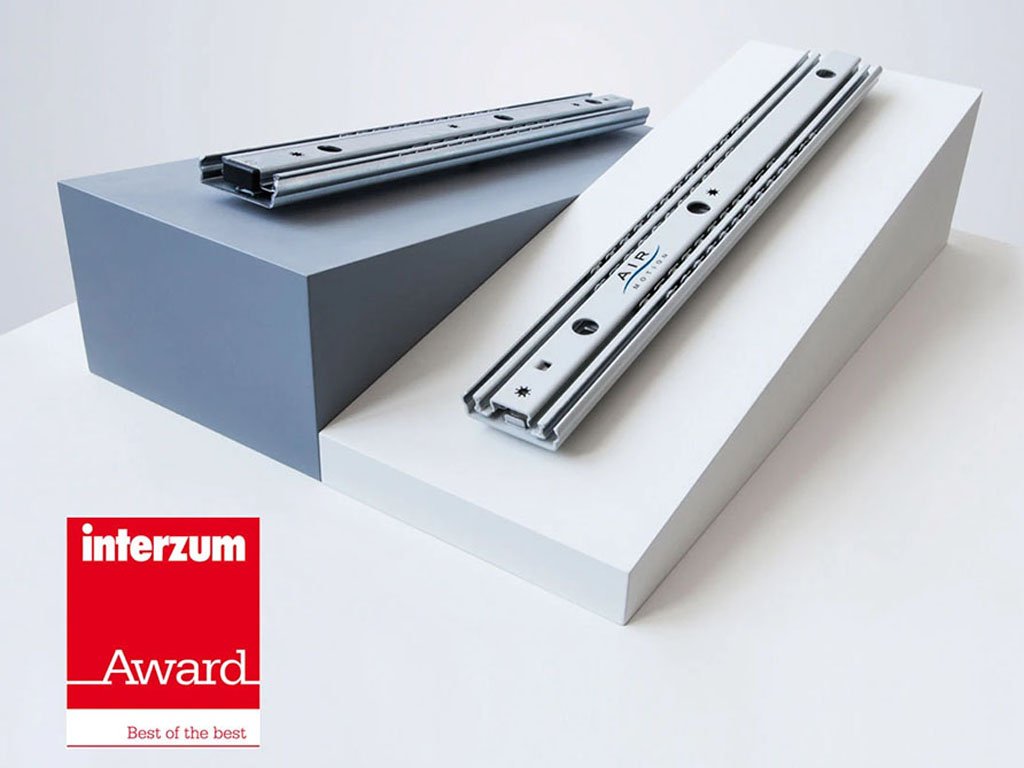
Aluminium can be the better choice for telescopic slides when component weight matters and the selected model meets the required load rating. Steel is often better suited where stiffness or load capacity is the main constraint. The choice depends on the complete assembly, its mounting arrangement and its operating environment.
How do aluminium and steel differ?
Aluminium has a density of about 2.7 g/cm³, compared with about 7.8 g/cm³ for steel. A component of equal volume is therefore substantially lighter in aluminium. A finished aluminium slide may need a different section to meet the required stiffness or load rating. Compare the actual mass and data sheets of the two candidate assemblies.
When does aluminium make sense?
Consider aluminium for weight-sensitive installations such as vehicle equipment, campervan storage or mobile units. Reducing the mass of several moving assemblies can free up payload. Aluminium can also be useful in damp environments where the chosen alloy and surface finish are suitable.
When is steel the better option?
Steel generally offers greater stiffness for the same section geometry. If the available space is tight and the load is high, a suitable steel slide may fit the requirement more readily. Compare the load rating for the exact length and installation orientation, particularly where the assembly is subject to shock, vibration or an offset load.
What should you check in a corrosive environment?
Aluminium forms a protective oxide layer. Its performance depends on the alloy and exposure. Strong acids or alkalis can attack the surface, and contact with dissimilar metals in the presence of moisture can lead to galvanic corrosion. Check the effects of salts, cleaning agents and adjoining materials before choosing a finish or grade.
For demanding cleaning regimes or particular corrosive environments, consider an appropriate stainless steel grade and verify its suitability for the application.
Checklist for choosing a slide material
- Load and travel. Record the moving load, required travel, mounting orientation and any dynamic forces.
- Weight target. Compare complete assemblies, including fasteners and brackets.
- Environment. Note moisture, temperature, chemicals and the cleaning regime.
- Available space. Check closed length, section dimensions and mounting clearances.
- Production cost. Include finishes, additional fixings and any changes to the surrounding assembly.
Aluminium, steel and stainless steel from SCHOCK
SCHOCK manufactures ball-bearing slides in Europe. See our aluminium telescopic slides for weight-sensitive applications, or compare the materials and extension types in our telescopic slide range. Talk to us about your application.